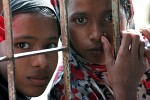
Issues that Matter: Obese Children, Malnourished Children, By the Numbers

February 5, 2011

More than 25 million children in the U.S. are overweight, but at least 3 million children worldwide died of hunger and malnutrition in 2008.* Obesity is the 2nd leading cause of preventable disease and death, preceded only by smoking.

Experts agree that in the last 30 years, childhood obesity has doubled or even tripled in many large countries such as the United States and Canada. Other countries on this list include Australia, Japan, Germany, Spain and the UK. Some lower and middle income countries, like Brazil, are battling both obesity and malnutrition. Every day, almost 16,000 children die from hunger-related causes.

Adult obesity is also on the rise. According to the Centers for Disease Control (CDC), none of the 50 states met the “Healthy People 2010” obesity target of 15 percent. CDC data shows that in 2007-2008, approximately 72.5 million adults in the United States were obese (CDC, unpublished data, 2010). A study from 1987 to 2001 showed a 27 percent increase in medical costs for diseases associated with obesity. Obesity medical costs exceed $147 billion. The CDC also estimates that obese persons have medical costs $1429 higher (2008) than people with normal weight.

On the flip side, Bread for the World estimates that worldwide, 178 million children under 5 have stunted growth, due to malnutrition. “Children who survive early childhood malnutrition suffer irreversible harm—including poor physical growth, compromised immune function, and impaired cognitive ability.” Many of these children live in sub-Saharan Africa and South and Central Asia. Bread for the World estimates economic losses in these countries as high as 2-3 percent of the GDP.

Obesity is the result of a calorie intake higher than a calorie output. The American Academy of Child and Adolescent Psychiatry (AACAP) estimates obesity commonly begins at age 5 or 6 and costs society about $100 billion per year. The chance a child will be obese is 50 percent with one obese parent and 80 percent with 2 obese parents. AACAP relates childhood obesity to:

poor eating habits

overeating or binging

lack of exercise

family history of obesity

medical illness

medications

stressful events or life changes

family and peer problems

low self-esteem

depression

Body Mass Index is an indicator of body fat, and may be used to determine overweight and obesity categories. The CDC BMI Calculator, shown here, is for adults over the age of 20. Check with your doctor for overweight and obesity indicators for kids.

BMI For Adults Widget

More statistics from the Clinton Foundation:

The current American generation may be the first in our history to have shorter lives than do their parents.

The average teen eats fast food twice a week.

Only 3 out of 10 of high school seniors report eating green vegetables nearly every day or more.

Almost one in four children does not participate in any free-time physical activity.

A typical American youth spends approximately four to five hours a day watching TV, using the computer or playing video games.

The indirect costs of obesity (such as missed work days and future earnings losses) have been estimated at $56 billion dollars per year.

Children treated for obesity are roughly three times more expensive for the health care system than children of normal weight.

Severely overweight people spend more on health care than smokers.

According to the Centers for Disease Control, this can have both immediate and long-term health risks for children (and adults). Topping the list are risk factors for heart disease such as cholesterol and high blood pressure. Potential health problems are many: bone and joint problems, sleep apnea, social and psychological problems. Obese kids are more likely to become obese adults wither higher risks for heart disease, diabetes, stroke, arthritis and cancer.

AACAP makes the following suggestions to combat this problem.

Ways to manage obesity in children and adolescents include:

* start a weight-management program

* change eating habits (eat slowly, develop a routine)

* plan meals and make better food selections (eat less fatty foods, avoid junk and fast foods)

* control portions and consume less calories

* increase physical activity (especially walking) and have a more active lifestyle

* know what your child eats at school

* eat meals as a family instead of while watching television or at the computer

* do not use food as a reward

* limit snacking

* attend a support group (e.g., Overeaters Anonymous)

*Stats from Clinton Foundation and Bread for the World.


Issues that Matter: Illiteracy Costs Us All

December 12, 2010

On a typical day, many of us read the morning newspaper while waking up with coffee. Maybe we leave a short note for our spouse or kids before we leave the house. Perhaps we sign our child’s school paper. Maybe we read and write e-mails and texts from our smart phone. While driving to work, we read the road signs without even thinking about it.

When we reach work, many of us begin reading documents almost immediately, whether its instructions, reports or correspondence. If we go out to lunch, we peruse the menu before selecting. On the way home from work, we may stop at the grocery store, list in hand.

I take those routine tasks for granted, as I’m sure you do as well. Now imagine not being able to read or write. No newspaper. No smart phone. No notes or signing school papers. No work documents. Likely no driving. Ordering the same thing at lunch. No grocery list. The limitations are enormous.

According to the United Nations Educational, Scientific and Cultural Organization (UNESCO), 774 million adults are illiterate in their native language. The number in the US is 30 million; two thirds of those are women.

This is not a post about immigration. Undoubtedly, a certain percentage of the illiteracy rate is due to illegal immigration. This is not a post about human trafficking, although a large percentage of trafficking victims are also illiterate. (See my last post on human trafficking.)

This is a post about Americans who cannot read and write.

ProLiteracy defines literacy as “the ability to read, write, compute, and use technology at a level that enables an individual to reach his or her full potential as a parent, employee, and communty member.”

UNESCO defines literacy as the “ability to identify, understand, interpret, create, communicate, compute and use printed and written materials associated with varying contexts. Literacy involves a continuum of learning in enabling individuals to achieve their goals, to develop their knowledge and potential, and to participate fully in their community and wider society.”

So why is the ability to read and write so important, other than the convenience and necessity of every day life? Many, if not most, socio-economic issues are connected to low literacy:

–More than half of our inmates can barely read or write. According to First Book, an American high school student drops out every 26 seconds. If we could increase the male graduation rate by just 5 percent, we could save up to $49 billion in costs related to crime.

–Illiteracy adds about $200 billion to the cost of health care annually. If you can’t read about disease prevention or even read how much medicine to take, it’s much more difficult to stay healthy. This increases hospital visits and stays as well as use of emergency services.

–Illiteracy contributes to problems of abuse. If you can’t read about your rights, how can you advocate for yourself? Literacy can play a major role in reducing gender inequity.

–Over $225 billion is spent on lost productivity and crime, directly related to literacy. First Book sites how the U.S. Department of Education “expects the literacy gap in America will produce a shortage of 12 million qualified workers in the next decade.”

The National Center for Education Statistics (NCES) sponsors the National Assessment of Adult Literacy (NAAL) every decade or so. In the last assessment, undertaken in 2003, 1.1 million people couldn’t even take the test because they are NON-literate.

Monetary costs are, of course, much easier to quantify, but we don’t want to forget about the human cost. Illiteracy limits the capacity of adults and children in so many ways and makes them dependent on the government, their communities and even the kindness of strangers.

How can you get involved?

Find the literacy council nearest you.

Become a tutor. The councils will train you, and give you teaching materials.

Volunteer your time in other ways. Most have volunteer boards and largely volunteer staffs, and would welcome your expertise.

Attend a local fundraiser. Most are community events.

Donate money. Resources are always tight.

In September, the U.S. House of Representatives formed the Adult Literacy Caucus. Urge your member of Congress to join/support this Caucus.

Literacy Resources
 
ProLiteracy

UNESCO

First Book 

American Library Association

National Center for Family Literacy

Almanac of Policy Issues  –

America’s Literacy DirectoryNational Center for Education Statistics (NCES) National Assessment of Adult Literacy (NAAL) 


Issues that Matter: Human Trafficking

November 29, 2010

Human trafficking has always bothered me, but until I started researching it, I had no idea how prevalent it is, even in the U.S.

According to the U.S. Department of Health and Human Services (HHS), 600,000 to 800,000 individuals are brought across international borders for human trafficking purposes annually. Sewa-aifw.org puts that estimate at 900,000 people, many of them children. That’s almost one million people a year. The regions of the world with the most severe trafficking are Asia, Eastern Europe, Latin America and Africa.

Countries like the U.S. are often “destination countries”, the places to where the victims are brought. According to Sewa-aifw, up to 20,000 victims are brought to the United States annually, many of them young children. The women are usually forced to work in the sex trade or as unpaid, abused domestics. The men are most often forced into migrant farming or factory work, although they occasionally work in the sex trade. The children are used for any or all of those purposes.

Victims are either taken, sold by their families or lured away with false promises of a good job, a better life, a way to provide for their families back home, or a good marriage.

Once the victims are taken, the traffickers use force, threaten to kill the person or the person’s family if the victim doesn’t comply with their orders, or they falsely tell the victim they only have to pay off a certain amount of debt and then will be free. The victims are watched constantly and often kept under lock and key. Their documents are confiscated and they are kept isolated.

Victims are often brought to countries where they don’t speak the language. This encourages isolation and abuse. If they can’t communicate with those around them, how will they get help? Or better yet, how will they know where to go get help?

Sadly, many victims do not realize that they are victims. They may come from a country with a mistrust of government. Or, since they’re being fed and sheltered, they don’t perceive themselves as victims. They may be afraid of the authorities if the traffickers have convinced them they are in debt or otherwise in trouble.

We have our own problems with trafficking, not just as a destination country. Just a week ago, arrests were made in Florida for sex trafficking. In April, nine people in LA were convicted of sex trafficking, after bringing young women in from Guatamala to work as prostitutes. In February, a man in Alaska was arrested for forcing young women to work as prostitutes.

In fiscal year 2009, the FBI launched 167 human trafficking investigations and made 202 arrests. Human trafficking is second only to drug dealing and arms dealing (which are tied for first) as a criminal activity. And the problem is growing.

“It’s sad but true: here in this country, people are being bought, sold, and smuggled like modern-day slaves.” FBI website

The sewa-aifw web site has great information on how to identify victims of human trafficking, how to communicate with potential victims, and victims’ needs and rights.

It tells you how to potentially identify a victim of trafficking. Signs include living with employer, signs of abuse, submissiveness, inability to speak alone, fearfulness, being kept under surveillance.

HHS runs The Campaign to Rescue and Restore Victims of Human Trafficking.  Their web site has loads of information on the issue and how they are working to combat it. It also tells you how you can become involved where you live.

If you come across someone you believe to be a victim of this, call 911.

Resources:

U.S. Department of Health and Human Services (HHS) National Human Trafficking Resource Center 1-888-3737-888  Operates 24 hours.

U.S. Department of Justice (DOJ) Trafficking in Persons and Worker Exploitation Task Force Line 1-888-428-7581  Only operates on weekdays, 9am-5pm EST. Call to report a potential case of human trafficking. This is a direct call to Federal law enforcement.

National Domestic Violence Hotline 1-800-799-7233 Operates 24 hours. Can make local referrals.


Interview the Vet in Your Life for the Library of Congress

November 12, 2010

In honor of Veterans’ Day yesterday, I want to promote a great project undertaken by the US Library of Congress.

I came across their booth while I was at the National Book Festival on the Mall in Washington, DC.

Congress created the “Veterans History Project” in 2000. It is a part of the permanent collections at the Library of Congress.

They are collecting interviews, memorabilia, original photos and historical documents from WWI up through all the recent wars/conflicts.

What I think is so interesting is that they are encouraging people to interview the vets in their life and submit the video or audiotapes. Once the items are processed, anyone who goes to the Library of Congress can view them.

In addition, each vet will have their own web page, once the contributions are processed.

Interview the veteran in your life! I will interview my Dad at Christmas; he was in the Navy Air Corps in WWII. You can download an interview kit at the Library of Congress web site or write the Library for more information.

Library of Congress Veterans Project: www.loc.gov/vets


Message Development — Know Your Audiences

October 28, 2010

Outreach strategies abound, especially given all the social media. To be successful in this economy, or any economy, your messages need to be focused on the audiences you are trying to reach and need to illustrate the critical reason for your existence.

Who are your members? Who are your customers? What do they want? What do they need? What will entice them to look your way initially? What will entice them to keep coming back?

Your members are the people who believe in your mission. If you run the Humane Society, your members are pet owners and pet lovers. If you work on civil rights, your members are those people who: a) have been affected by civil rights issues; b) know someone affected by civil rights issues; or c) have a passion for civil rights. These people are your primary audience.

Secondary audiences include funders, the media, partner groups with like-minded organizations, neighbors, officials and vendors. Internal audiences include your board and your staff.

If you’ve developed a relevant mission about which you are passionate, that is the foundation of all your messaging.

I’m a big believer in cutlines, aka slogans. Develop a short one-sentence slogan and include it in all your correspondence and message materials. For example: “Curing polio, one child at a time.” This is a part of branding your organization. When this slogan is on all your materials, your audiences know at one glance what you’re all about. They can also decide quickly if they are interested in reading more or being a part of your organization.

Put yourself in the mindset of your members. Why are they members of your organization? Why do they give you money or attend your functions? What do they care about?

Once you determine those answers, address those needs. Provide information on the things in which your members and potential members are interested. If you’re an environmental group, provide legislative updates and information about sites across the country, tell stories about how you are helping to save the environment, stress how your members are helping in this quest. Give them further resources, whether that’s blogs or links or books or other organizations.

Always include a call to action. Potential members as well as members want to know how they can help. Some people will just give money, and that’s fine. Other people will be interested in actually going out to a site to help with the cleanup, or maybe they can help with an event or passing out flyers or simply spreading the word. The more people feel engaged and a part of the cause, the more they will do.

Set up interactions, if possible. Invite people to your offices or to your events. Encourage participation in your blogs. Provide feedback forms. Try and set up a dialogue. Again, you want people to feel engaged.

Become the main information hub on anything and everything to do with your mission.